
11.12.2026 | News, Featured Homepage, Swag, Why Stran, 2026, Gen Z, T-Shirts
What Vintage Corporate Merch Teaches Brands About Design
Walk into any vintage shop and you'll likely find a rack of old company shirts. A regional bank's charity 5K tee. A software conference shirt from a decade ago. A hardware store's anniversary crewneck. Someone donated each of them, and now someone in their early twenties is paying vintage prices to wear them.
For brands, that rack is free research. It shows which branded apparel people keep wearing years after the event that produced it, and which pieces never leave the drawer. The pattern is consistent, and it points to a smarter way to plan your next apparel order.
Why are young shoppers buying old company shirts?
Gen Z shops secondhand by default, and old branded tees deliver what they look for: quality, individuality, and a story.
Resale is mainstream now. ThredUp's 2026 Resale Report found that 59% of consumers shopped secondhand apparel in 2025. The U.S. secondhand market grew 13% that year, nearly four times faster than the broader clothing market.
Company tees fit right into that habit. Each one is a small artifact of a place and time, and nobody else at the party owns the same credit union fun run shirt. College and local merch follow the same pattern. A Georgia Tech alum who works at an Atlanta vintage store told the alumni association that old Georgia Tech pieces come through the shop regularly.
Quality plays a role too. Vintage shop owners point out that older tees were often heavier, 100% cotton, and made to last. A shirt that survives twenty years of washing has earned its resale value.
What makes a branded tee worth reselling?
The tees that last share three traits:
-
A premium blank
-
Design with personality
-
Branding that knows when to stay quiet.
Industry research backs up what the vintage racks show. In PPAI's "5-Second Impact" study, nearly 90% of respondents said design affects whether they keep a product, and 44% preferred subtle branding over big, bold logos. Respondents also judged quality by feel, pointing to weight and texture as signs of value.
PPAI's Product Power 2026 study found the same thing from another angle. Nearly two-thirds of consumers said they're very likely to keep a branded product for six months or longer, and they named durability, design, and material as the reasons.
|
Detail |
Gets Kept (and Resold) |
Gets Donated and Forgotten |
|
Blank |
Heavier cotton, good drape, fit that holds up |
Thin, boxy, shrinks after one wash |
|
Design |
Artwork with a point of view, a nod to a moment or place |
Logo centered on the chest, nothing else |
|
Branding |
Tonal, small, or worked into the art |
Oversized logo plus a tagline |
|
Story |
Tied to a specific event, team, or milestone |
Generic, could be from any company |
What this means for your next apparel order
Plan every shirt as something people will wear on a Saturday, and the event value takes care of itself.
Most apparel orders start with a date and a headcount. The better starting question is whether anyone will reach for this shirt months down the road. A few shifts make that far more likely:
-
Upgrade the blank before you add quantity. Fewer, better shirts outperform a pile of thin ones that nobody wears twice. PPAI's research found people judge how well-made something is by its weight and feel the moment they pick it up.
-
Give the design a reason to exist. Tie the artwork to the event, the city, the team, or the milestone. Specific beats generic every time.
-
Scale the logo to the moment. A tonal print, a small chest hit, or a logo worked into the illustration gets worn in public. A giant logo mostly gets worn to the gym.
-
Think in collections. A company store or recurring drop lets you build a lineup over time, so each piece can be more distinctive instead of trying to do everything at once.
Think about where a favorite shirt ends up on a Saturday. Coffee runs, ballgames, the thrift store checkout line. When your shirt is the one people grab, your brand rides along without costing you another dime.
Can you design merch that ages well on purpose?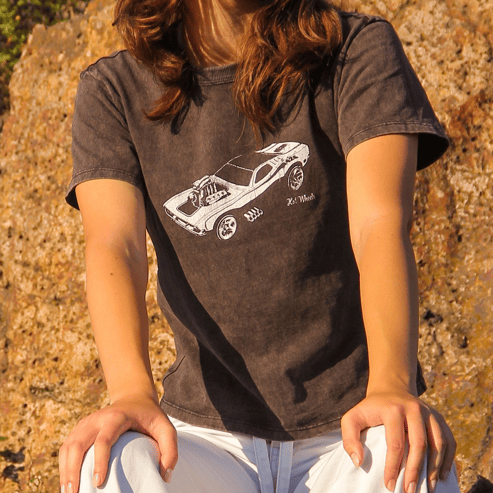
Yes. The vintage look comes from fit, artwork, and print technique, so a new shirt can carry it on day one.
ASI's coverage of the trend breaks down the tools apparel decorators use:
-
Relaxed fits. Boxier, roomier cuts read as vintage and match how younger audiences wear tees now.
-
Garment dyeing. Dyeing the shirt after it's sewn gives it a soft, lived-in look out of the box.
-
Distressed or retro artwork. A corporate logo can take on a vintage feel through distressing and period-inspired type.
-
Your own archive. Old logos, past slogans, and anniversary marks make great source material. Heritage designs also give employees something to be proud of.
That last point is the easiest win. Most companies already have a backstory worth printing. A retired logo or a founding-year mark turns an ordinary order into something people want to collect.
make your next shirt the one that lasts
The best branded apparel earns a second life because people wanted to keep it the first time. Stran's creative team helps brands plan apparel programs around better blanks, sharper design, and branding that gets worn. Let's make something your audience will still be wearing years from now.
CTA: Contact Our Team
FAQ
Q: Why is vintage corporate merch popular with Gen Z?
A: It offers quality, individuality, and a story. Older tees were often heavier cotton, each one is hard to duplicate, and secondhand shopping has become a normal habit for younger consumers.
Q: Do people keep promotional apparel?
A: Many do. In PPAI's Product Power 2026 study, nearly two-thirds of consumers said they're very likely to keep a branded product for six months or longer.
Q: What makes branded apparel feel high quality?
A: Weight, texture, and durability. People judge quality by touch, so the blank you choose matters as much as the print.
Q: Should logos be big or small on company shirts?
A: Smaller usually wins for everyday wear. PPAI found 44% of consumers prefer subtle branding over big, bold logos, and tonal or integrated logos tend to get worn more often in public.
Q: How can a brand use its history in merch design?
A: Pull from retired logos, past slogans, founding dates, and milestone anniversaries. Heritage designs feel collectible and give employees a reason to wear them with pride.
Resources:
More Resources:
Elevate Your Branded Merch Strategy
